16 Feb 2026
In-store shoppers are your super power
For years, the advertising world ran on third-party cookies. Brands could track users across the internet, building profiles that powered highly targeted campaigns. Retailers, meanwhile, often viewed their loyalty programme data as a tool primarily for CRM and direct marketing.
But the game has changed. With Google's impending cookie deprecation, Apple's stringent privacy policies, and increasing regulatory pressure, the digital ad market is facing a seismic shift. Brands are scrambling for reliable, privacy-compliant ways to reach their audiences.
This is where the physical retailer steps in. You possess what every brand now desperately needs: authenticated, first-party data based on real-world purchase intent. This isn't just data; it's your superpower in the post-cookie world.
The "Dirty Data" Dilemma of Digital
The problem with much of the "targeted" digital advertising of the past was its reliance on inference and often, "dirty" data. Was that click real? Was that impression seen? Was the profile accurate? The answers were frequently murky.
Contrast this with the data you, as a retailer, collect:
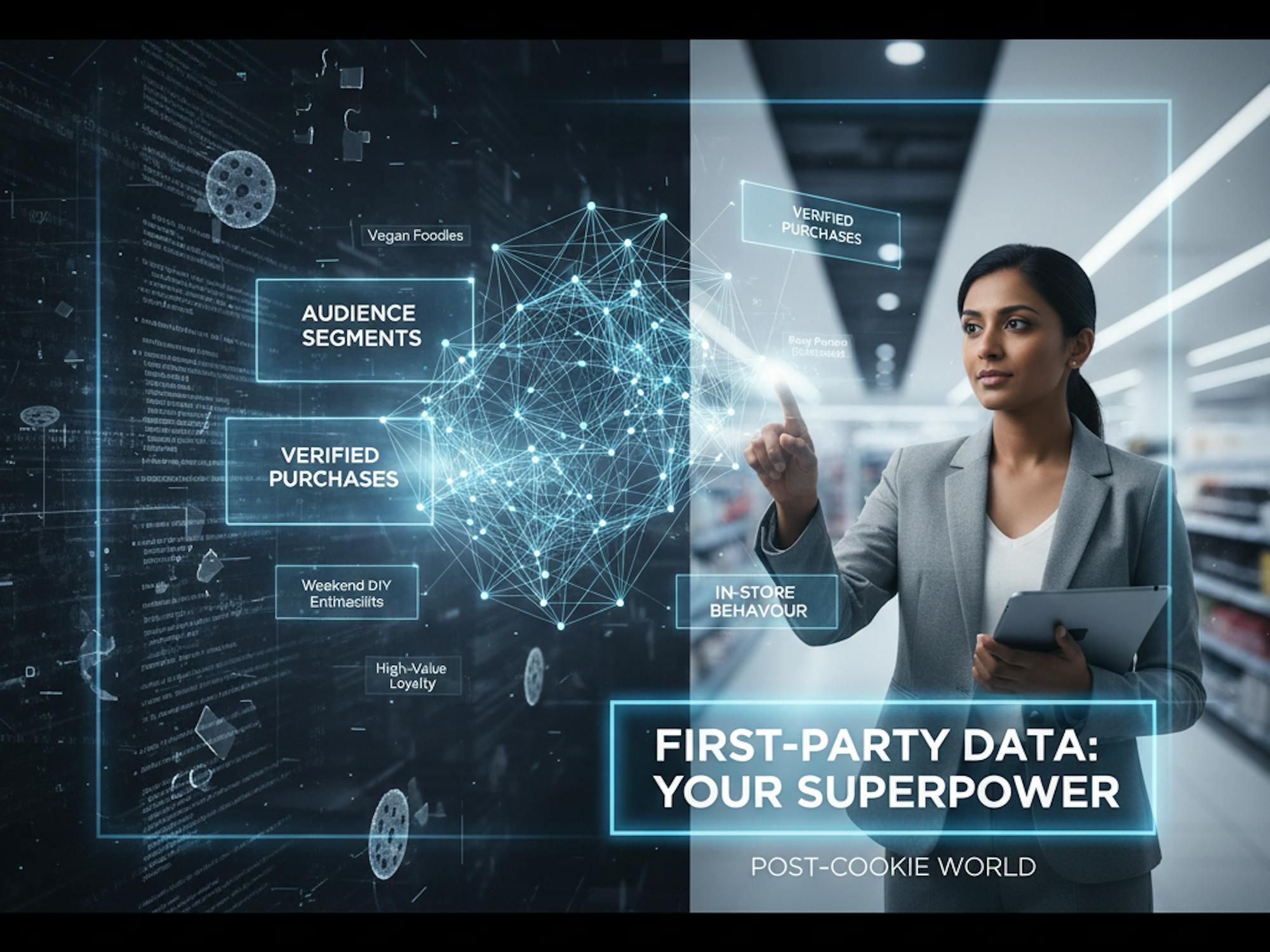
- Verified Identity: Through loyalty programmes, you know exactly who your shoppers are (with consent).
- Actual Purchases: You track what they actually bought, not just what they browsed.
- In-Store Behaviour: Advanced analytics can even reveal their movement patterns and interactions within your physical space.
This is clean, high-fidelity data that reflects genuine consumer behaviour and purchase decisions, making it infinitely more valuable.
Cleaning and Packaging Your Data Goldmine
Having data is one thing; making it actionable and appealing to brands is another. Retailers need to professionalise their data assets to compete with the likes of Facebook and Google. This involves a three-step process:
- Audience Segmentation: Move beyond basic demographics. Segment your loyalty base into rich, behaviour-driven cohorts: "Vegan Foodies," "Busy Parents," "Weekend DIY Enthusiasts," "Premium Wine Connoisseurs." These segments are gold for brands.
- Privacy-Compliant Activation: Ensure your data usage is transparent, consented, and fully compliant with GDPR and other regulations. This builds trust with both your customers and your brand partners. Your in-store media network becomes a "walled garden" of privacy.
- Measurable Outcomes: Brands don't just want data; they want proof of ROI. Your first-party data allows for closed-loop attribution. When a brand runs a campaign through your in-store media network (powered by your data), you can show them precisely how many incremental sales it generated, something digital channels are struggling to do.
Becoming the New Media Powerhouse
By treating your first-party data as a strategic asset, you transition from being a retailer that simply sells products to a media powerhouse that also sells access to high-value audiences.
Imagine a scenario: a new premium snack brand wants to target health-conscious shoppers in a specific region. Instead of buying unreliable digital impressions, they can partner directly with you. You provide access to your "Active Wellness" loyalty segment targeted in-store, digital, or app-based experiences or digital aisle displays, ensuring their message reaches the exact right person, at the exact right moment of purchase intent.
In the post-cookie world, the battle for consumer attention and reliable data is intensifying. Retailers who understand how to clean, package, and ethically activate their first-party data are not just surviving; they are becoming the indispensable partners for brands seeking genuine, measurable impact.
Your shopper isn't just your business; it's your new competitive edge.