04 Feb 2026
Does Your Loyalty Scheme Feel Like a Burden NOT a Benefit?
Loyalty programmes are one of the most widely accepted tools in retail. They are often treated as essential infrastructure, something every serious retailer must have. The logic is familiar: reward customers and they will come back more often, spend more, and choose you over competitors.
The problem is that this logic only holds for a limited period of time.
In the early life of a loyalty programme, it genuinely works. Customers are learning how it functions. They explore the mechanics, test outcomes, and adjust their behaviour to see what they receive in return. During this phase, incentives feel meaningful. They influence decisions because habits are still forming and expectations are not yet fixed.
Retailers see the impact quickly. Visit frequency increases, baskets grow, and engagement rises. The programme looks successful and the cost feels justified because behaviour is clearly changing.
But this phase does not last.
Once customers understand the programme, behaviour stabilises. The rules are no longer new and the rewards no longer feel motivating. Points, discounts, and perks stop being something customers respond to and start being something they expect.
At that point, loyalty stops influencing behaviour and starts reinforcing it.
Customers no longer think about changing what they do to earn a reward. They assume the reward is part of the experience. The incentive becomes background noise. It does not drive incremental visits, additional spend, or meaningful switching. It simply rewards behaviour that would have happened anyway.
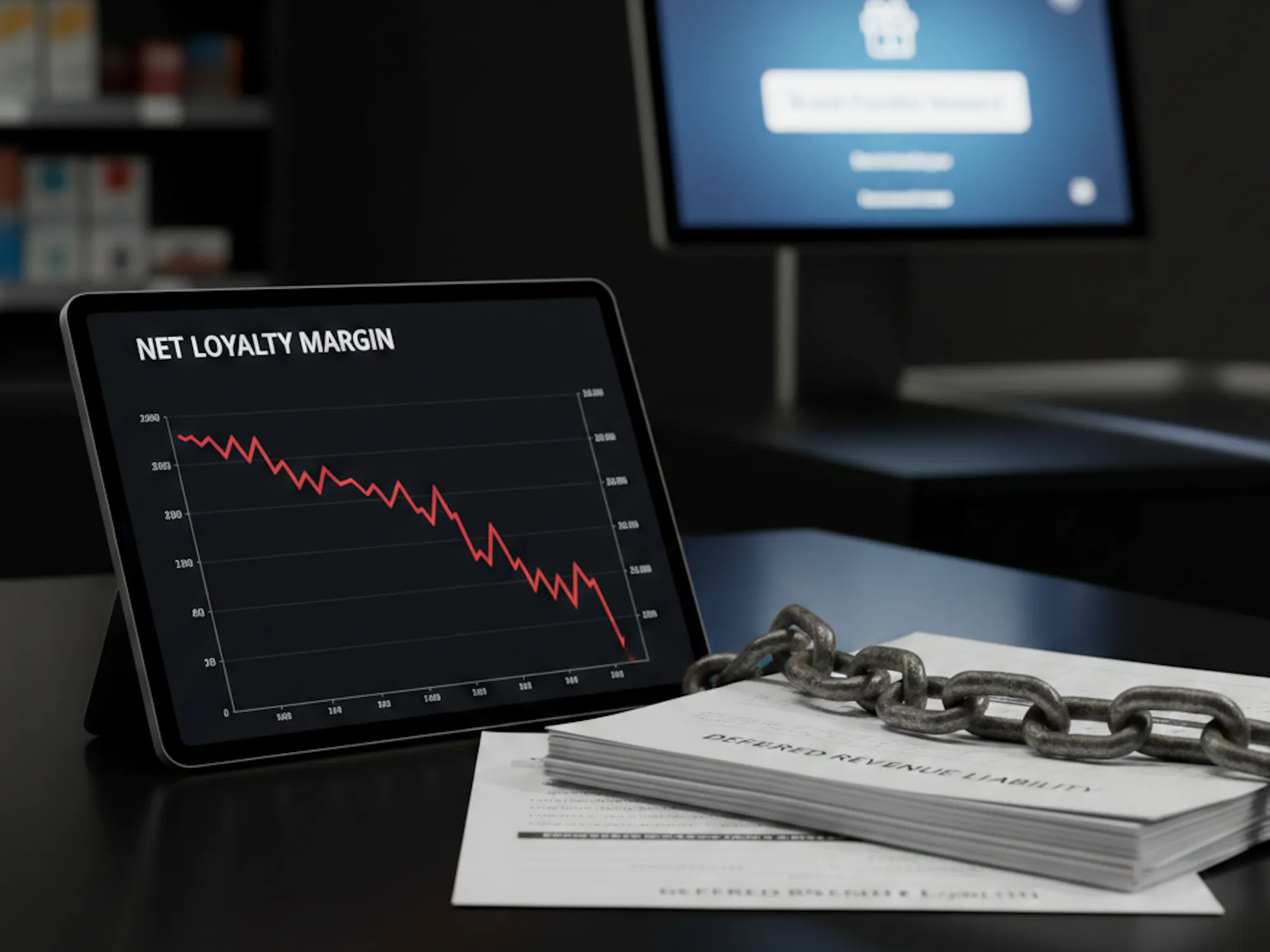
This is where loyalty quietly becomes expensive.
The retailer continues to fund rewards at scale, but the behavioural leverage has gone. Every transaction carries a cost, yet very few of those transactions are truly incremental. Over time, discounts and points become embedded in price perception, turning the programme into a permanent rebate rather than a growth tool.
Customer expectations rise, but returns do not. Reducing rewards feels like taking something away, even if those rewards are no longer delivering value. The retailer becomes locked into an ever-growing cost base, funding loyalty because not doing so feels riskier than questioning its effectiveness.
This is not a failure of execution or intent. It is structural.
Traditional loyalty rewards behaviour after it has already happened. It thanks customers for decisions they have already made. That approach works when habits are still forming, but once those habits are set, rewarding the past does nothing to influence the future.
Without a way to reintroduce leverage at the moment decisions are made, loyalty inevitably shifts from a driver of growth into a fixed cost of doing business.
How loyalty should work in 2026
Loyalty in 2026 should not be a cost line on the retailer’s P&L. It should be a platform that creates value for customers while generating revenue for the retailer.
That requires a fundamental shift in who funds loyalty and when influence is applied.
At Activeloyalty, loyalty is powered by brands, not retailers. Brands create the offers. Brands fund the promotions. Brands pay to surface those offers in front of engaged shoppers and they pay again when an offer is redeemed.
For retailers, this changes everything.
Instead of spending one, two, or even four percent of revenue funding points and discounts, loyalty becomes a new commercial channel. One that generates incremental income, not ongoing cost. One that monetises attention at the most powerful moment in retail, when the customer is already in-store and ready to decide.
For customers, the experience improves rather than stagnates.
Offers remain new, relevant, and interesting because they are created by brand marketing teams whose job is to drive engagement and trial. Loyalty members see fresh value, not recycled incentives, and the programme regains its ability to influence behaviour in real time.
This is loyalty that earns its place again.
- Not as a permanent rebate.
- Not as an unavoidable expense.
But as a revenue-generating platform that benefits retailers, brands, and shoppers alike.
That is how loyalty should work in 2026.